
Description
Product Overview
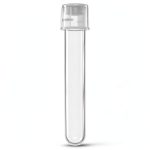
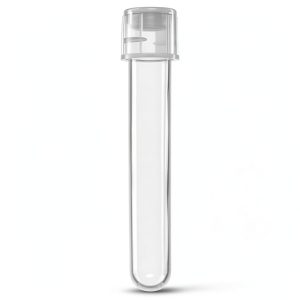
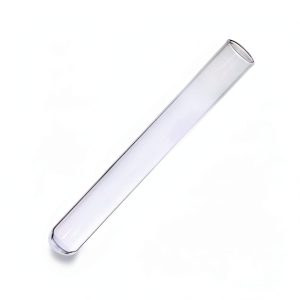
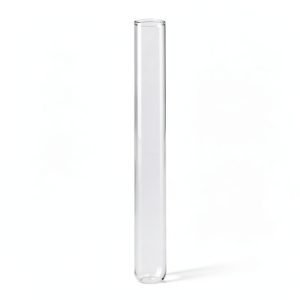
The Kimax 73500-1075 N-51A culture tube is engineered from high‑quality borosilicate glass, a material renowned for its durability, thermal stability, and resistance to chemical leaching. Each tube holds a precise 4 mL volume, offering a consistent internal diameter that supports reproducible experimental conditions across a wide range of microbiological and cell‑culture protocols. The rim‑top design adds an extra layer of protection during handling, reducing the risk of spillage or breakage when tubes are transferred between workstations.
Dimensions of the tube are optimized for standard laboratory equipment. With a length of approximately 11 cm and a diameter of 8 mm, the tube fits comfortably into common tube racks, centrifuges, and incubators. The clear glass provides full visual access to the contents, allowing technicians to monitor growth, turbidity, or color changes without opening the tube. The uniform bottom ensures stable placement on flat surfaces, which is essential for accurate measurements and automated processing.
Kimax, a trusted name in laboratory consumables, has incorporated a series of quality‑control steps during manufacturing. The glass is annealed to eliminate internal stresses, and each batch undergoes rigorous inspection for dimensional accuracy and surface integrity. The result is a tube that meets the stringent requirements of research institutions, biotech firms, and clinical laboratories.
Beyond the core material, the packaging strategy contributes to the product’s reliability. Tubes are arranged in shrink‑wrapped trays that keep them aligned and protected from mechanical shock during shipping. The trays are sized for easy storage on bench tops or in drawer units, allowing users to retrieve individual tubes without disturbing the rest of the batch. This thoughtful design minimizes contamination risk and saves valuable bench space.
![[Product front view showing all components]](https://www.opticstore.store/wp-content/uploads/2026/07/18494ad407d449e89720c809b362b948.jpg)
Usage
These culture tubes excel in cell‑washing applications where gentle handling and chemical inertness are paramount. The rim top prevents liquid loss during centrifugation or vortexing, making the tubes suitable for protocols that involve repeated washing steps, such as peripheral blood mononuclear cell isolation or bacterial culture purification. The 4 mL capacity provides enough volume for multiple wash cycles while keeping reagent consumption low.
In addition to cell‑washing, the tubes are compatible with a variety of assays, including spectrophotometric measurements, small‑scale fermentations, and enzyme reactions. The clear borosilicate glass allows for direct optical readings without the need for additional cuvettes, streamlining workflow and reducing waste. Researchers working with temperature‑sensitive samples appreciate the glass’s ability to withstand rapid temperature changes without cracking, enabling seamless transitions between ice baths and incubators.
The product’s design also supports high‑throughput environments. Because the tubes are supplied in trays of 1000, laboratories can stock sufficient inventory to meet the demands of large‑scale projects. The consistent geometry ensures compatibility with automated liquid‑handling systems, robotic incubators, and plate readers that accept standard tube formats. This versatility makes the Kimax culture tube a reliable choice for both manual and automated laboratory settings.
Why Choose Us
Choosing Kimax means selecting a partner committed to quality and consistency. The company’s long history in glassware production translates into a deep understanding of material science, allowing them to fine‑tune the composition of borosilicate glass for optimal performance. Each tube undergoes a multi‑stage inspection process that checks for dimensional tolerance, surface defects, and glass clarity, ensuring that every unit meets the same high standard.
Customer support is an integral part of the Kimax experience. Technical specialists are available to assist with protocol optimization, troubleshooting, and compatibility questions. Whether a laboratory is transitioning from plastic consumables to glass or scaling up an existing workflow, the support team provides guidance to maximize the benefits of the product.
Environmental responsibility is another differentiator. Borosilicate glass is fully recyclable, and the reusable nature of the material reduces the overall plastic waste generated by a laboratory. By opting for a durable glass tube, institutions can lower their ecological footprint while maintaining experimental integrity.
Finally, the product’s competitive pricing reflects the balance between premium quality and cost‑effectiveness. The case of 1000 tubes offers a price point that aligns with the budgeting constraints of academic, industrial, and clinical research facilities, making high‑performance glassware accessible to a broad audience.
Key Features
- Uniform 4 mL volume ensures reproducible results across experiments
- Rim‑top design reduces spillage and protects samples during handling
- Borosilicate glass provides excellent chemical resistance and thermal stability
- Clear construction allows direct visual monitoring and spectrophotometric reading
- Dedicated customer support and technical assistance for seamless integration
FAQ
What makes borosilicate glass suitable for cell‑washing procedures?
Borosilicate glass is chemically inert, meaning it does not leach ions that could interfere with cell viability or assay results. Its high thermal resistance also allows rapid temperature changes without cracking, which is essential when cells are transferred between cold and warm environments.
Can the tubes be autoclaved for sterilization?
Yes, the tubes are designed to withstand standard autoclave cycles (121 °C for 15‑20 minutes). The glass’s durability ensures that repeated sterilization does not compromise the tube’s structural integrity or clarity.
Are the tubes compatible with standard laboratory racks and centrifuges?
The tube dimensions (approximately 11 cm length and 8 mm diameter) conform to industry‑standard sizes, making them compatible with most tube racks, centrifuge rotors, and incubators used in research and clinical labs.
How does the shrink‑wrapped tray packaging protect the tubes during shipping?
The shrink‑wrap film holds the tubes in a fixed alignment, absorbing shocks and preventing individual tubes from moving independently. This reduces the likelihood of breakage and maintains sterility by limiting exposure to external contaminants.
What support does Kimax provide if I encounter issues with the product?
Kimax offers a dedicated technical support line staffed by experienced scientists who can help troubleshoot problems, suggest protocol adjustments, and provide guidance on integrating the tubes into existing workflows. Users can also access detailed product documentation and ordering assistance through the company’s website.
}

 DWK Life Sciences Disposable Borosilicate Culture Tube 10mL 250 Pack
  Asian Coffee Table Book Japan Travel Photo Guide Print Replica 2024
 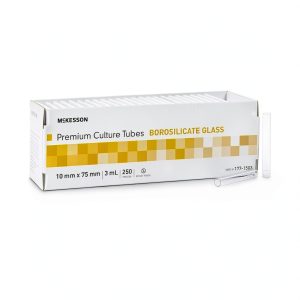 McKesson Glass Culture Tubes Borosilicate 3 mL Rims 250 Count
Reviews
There are no reviews yet.